
 Having just returned from a holiday in Brugge (see our travel photos below), Belgium, including a day tour through the battlefields and cemeteries of Flanders Field and Iepers (Ypres), this WWI tank in Ashford takes on new significance.
  We spotted the tank first, and then found, tucked behind, the "By the tank cafe." (8 New Street TN24 8UU) Breakfast was great, and in case you're wondering, By the Tank Cafe was awarded a Fod Hygiene Rating of 5 (very Good) by the Ashford Borough Council on 24 March 2014. But our interest quickly veered to the tank perched outside our window.
From a local website and on sign boards on the square we learned, "Ashford’s historic World War One tank, which has stood guard in the town centre for almost 100 years, is the last of its kind on outdoor display to the public.
The Kent News website reports: "The Mark IV was presented to the town in August 1919 by Captain Ferrar of the Army Council, in recognition of the people’s generous response to the National War Savings Appeals.
 "The tank, which was one of 1,220 built for combat in Belgium’s Flanders Fields, is believed to be one of eight that still exist in this condition and the only one in the UK standing visible to the public.
"Military vehicle expert Mr David Willey, curator at Bovington Tank Museum ... said: “... the tank sitting in Ashford’s town centre is special.”
"...One of the reasons Ashford’s has remained in the town is because in 1929 the back of the tank was removed, as well as all the mechanical workings inside, and an electricity sub station was installed within.
“It was gifted after the first world war to the people for helping to raise money during the war year. It is now the last one left and it probably only there because of the electricity station within it and because the council bother to come back and paint it every year and keep it in good nick.
"This particular model was considered the “female” version of the Mark IV which was armed with six Lewis machine guns where as the “male” versions were equipped with larger powder guns.
"Weighing 26 tons, the Mark IV had a max road speed of around 7mph. It also carried a crew of eight people in very cramped conditions. The model has been criticized in the past as its design meant that the 70 gallon fuel tank was placed above the crew compartment and a direct hit from an enemy shell would result in the crew being soaked in burning fuel with quick escape almost impossible.
"However, the model that stands just off New Street was also considered one of the most important tools of the war as it was able to cross trenches up to a maximum width of 10 feet.
 "Around 62 of them were used on June 1, 1917, at the famous battle of Messines Ridge in Belgium which saw allied forces try to break enemy lines. This attack was a run-up to the much larger Battle of Ypres, known as Passchendaele.
"After major refurbishment in 2005, the Mark IV at Ashford is still looking in a good state and has been re-painted in its original colours. It was also officially registered as a war memorial in November 2006."
 Read more about the tank at the Kent News website.
 And be sure to stop by and enjoy Breakfast in Britain at the By the Tank Cafe!
Here are some of our photos from our recent visit to Flanders Field and Iepers, Belgium.


 Langemark-Peolkapelle German cemetery -- our first stop -- sobering
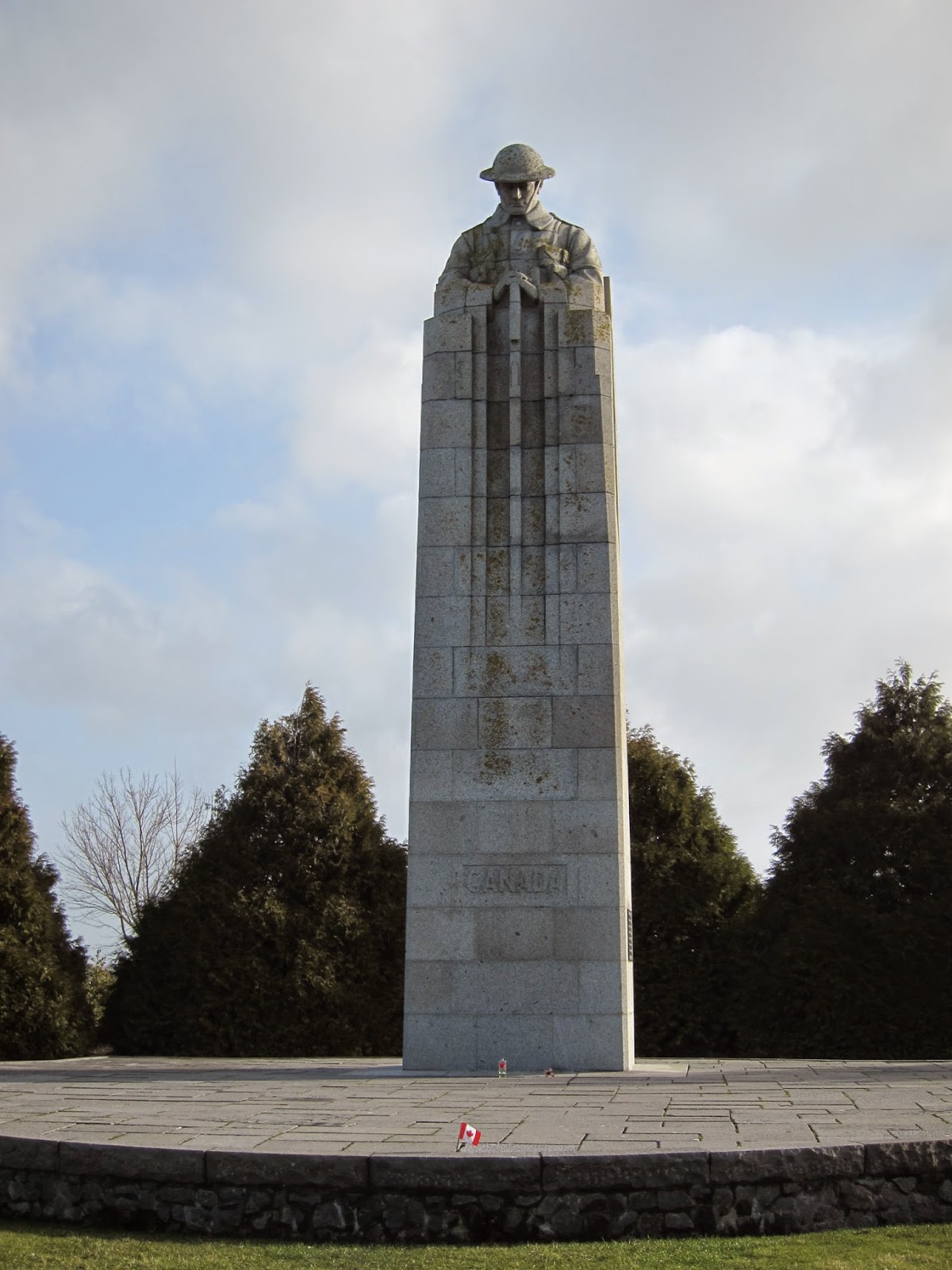

Canadian Memorial


 some of the war debris gathered from the fields by walkers, farmers, children -- still more is found too frequently.
 the trenches the mud the noise the horror


 The entry to the city of Iepers is through this World War One memorial gate, Menenpoort, lined with the names of the soldiers who died, from all the corners of the earth it seems.


 Iepers (Ypres or more familiarly known as "Wipers" by Allied troops) was completed flattened. When the townspeople were given the opportunity for a new modern city to be built on the spot, they demanded that the town be built as it was, to the medieval specifications. Today it is a beautiful city, modern yet ancient, surrounded by ramparts.

 The promise of new life in the Iepers cathedral.


